Keynote Speakers
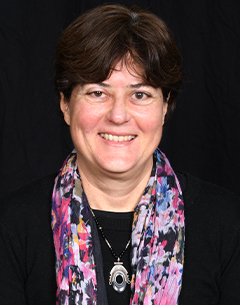
Prof. Pietro S. Oliveto
Southern University of Science and Technology, China

Biography: Pietro Oliveto
holds a Laurea degree in computer science from the University of
Catania, Italy, awarded in 2005, and a PhD degree from the
University of Birmingham, UK, conferred in 2009. His academic
journey has been marked by several prestigious fellowships,
including the EPSRC PhD+ Fellowship (2009-2010) and EPSRC
Postdoctoral Fellowship (2010-2013) at the University of
Birmingham, followed by the Vice-Chancellor's Fellowship
(2013-2016) and EPSRC Early Career Fellowship (2015-2020) at the
University of Sheffield. Prior to joining SUSTech, he served as
the Chair in Algorithms at the Department of Computer Science,
University of Sheffield.
Professor Oliveto's primary
research focus is on the performance analysis, particularly the
time complexity, of bio-inspired computation techniques. These
techniques include evolutionary algorithms, genetic programming,
artificial immune systems, hyper-heuristics, and algorithm
configuration. Currently, he is spearheading the establishment
of a Theory of Artificial Intelligence Lab at SUSTech.
His contributions to the academic community extend beyond
research, as he has guest-edited special issues for journals
such as Computer Science and Technology, Evolutionary
Computation, Theoretical Computer Science, IEEE Transactions on
Evolutionary Computation, and Algorithmica. He has also
co-chaired the IEEE symposium on Foundations of Computational
Intelligence (FOCI) from 2015 to 2021 and served as co-program
Chair for the ACM Conference on Foundations of Genetic
Algorithms (FOGA 2021). Additionally, he has held the position
of Theory Track co-chair at GECCO 2022 and GECCO 2023. Professor
Oliveto is a member of the Steering Committee of the annual
workshop on Theory of Randomized Search Heuristics (ThRaSH),
served as the Leader of the Benchmarking Working Group for the
COST Action ImAppNIO, has been a member of the EPSRC Peer Review
College, and served as an Associate Editor for IEEE Transactions
on Evolutionary Computation.
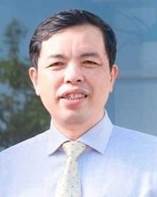
Prof. Eugene Rex Jalao
University of the Philippines, Philippines

Biography: Dr. Eugene Rex L. Jalao is a Professor of Analytics and Industrial Engineering in the University of the Philippines Diliman, Department of Industrial Engineering and Operations Research. He is also the Program Coordinator of the Artificial Intelligence Program of UPD. He specializes in Decision Support Systems, Business Analytics Solutions, Data Mining, Optimization and Systems Simulation. He obtained his Ph.D. in Industrial Engineering from Arizona State University (ASU) in May 2013. Additionally, he obtained his Masters of Science in Industrial Engineering degree as well as his Bachelor of Science in Industrial Engineering from the University of the Philippines Diliman in 2009 and 2007 respectively. His fifteen years of work and research experience are in the fields of business analytics both here in the Philippines and in the United States of America, specifically in the Banking, FMCG, Manufacturing, Real Estate, Healthcare, Telecommunications and Information Technology industries. He is also a certified SAP ERP Materials Management consultant, a Matlab computing associate, a Certified NVIDIA Deep Learning Instructor and an advocate of the R and Python Programming languages.
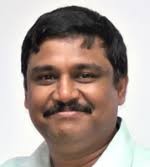
Prof. Rammohan Mallipeddi
Kyungpook National University, South Korea

Biography: Dr. Rammohan Mallipeddi, a Senior
Member of IEEE, is a Full Professor in the Department of Artificial
Intelligence, School of Electronics Engineering, Kyungpook National
University, Daegu, South Korea. He earned his master’s and Ph.D.
degrees in computer control and automation from Nanyang
Technological University, Singapore, in 2007 and 2010, respectively.
A globally recognized researcher, he ranks among the top 2% of
most-cited researchers worldwide, with over 9,000+ google scholar
citations and an h-index of 40.
Dr. Mallipeddi's research
interests span evolutionary computing, artificial intelligence,
image processing, digital signal processing, robotics, and control
engineering. He has published 65 SCI/SCIE papers (2020–2024),
including 35 in the top 10%, and collaborated with researchers from
12 countries. He is also an Associate Editor for prestigious
journals, including IEEE Transactions on Cybernetics: Systems, Swarm
and Evolutionary Computation, Information Sciences, Engineering
Applications of Artificial Intelligence, etc.
He has held
significant leadership roles, such as General Chair of the
International Conference on Smart and Intelligent Systems (2021),
Technical Program Chair of MIGARS (2023), and Program Chair for the
IEEE Symposium on Differential Evolution since 2018.
My
google scholar Profile:
https://scholar.google.com.sg/citations?user=bCJAc_8AAAAJ&hl=en
My Lab Website:
https://ecis.knu.ac.kr/
Invited Speakers
Prof. Sunny Joseph Kalayathankal
Rajagiri School of Engineering & Technology, India

Speech Title: Fuzzy Modelling and Decision Making
Applications in the Real World
Abstract: The thought process involved in the act of decision making is a complex array of streaming possibilities in which a person selects or discards information made available from diverse sources. In doing so one is led by a meaningful analysis of available information and optimal selection out of several apparently equi-efficient decisions. Since Zadeh (1965) published the fuzzy set theory as an extension of classic set theory, it has been widely used in many fields of application, such as pattern recognition, data analysis, system control, management etc. The unique characteristic of this theory, in contrast to classic mathematics, is its operation on various membership functions (MF) instead of the crisp real values of the variables. Molodtsov (1999) initiated the concept of soft set theory as a new mathematical tool for dealing with uncertainties. Pabitra Kumar Maji et al. (2001) introduced fuzzy soft set theory which also deals with uncertainties. Out of the several higher order fuzzy sets, intuitionistic fuzzy sets by Atanassov (1985) and Ordered intuitionistic fuzzy sets proposed by Kalayathanal et al. (2010) have been found to be highly useful to deal with vagueness. Intuitionistic fuzzy set is described by two functions: a membership function and a non - membership function. We develop and apply similarity measures between ordered intuitionistic fuzzy sets to multiple attribute decision making (MADM) under fuzzy environment.
Biography: Prof. Dr. Sunny Joseph Kalayathankal received the MSc. degree from Kerala University, Kerala, India in 1986, B.Ed from Calicut University, Kerala in 1987, MPhil from Kerala University in 1993 and Ph.D (Mathematics) degree in 2010 from Kerala University, MCA from Indira Gandhi National Open University, New Delhi, India in 2002, M.Tech IT from Karnataka State Open University in 2013 and Ph.D. in Computer Science under Bharathiar University, Coimbatore, India in 2018. He was the Head of the Department of Mathematics, K.E.College, Mannanam, Kottayam, Former Principal of Jyothi Engineering College Cheruthuruthy, Trissur , Former Director of Research in Jyothi Engineering College Affiliated to APJ Abdul Kalam Technological University, Kerala India. He is currently working as Professor of Computer Science & Engineering in Rajagiri School of Engineering & Technology, Kerala , India and has 38 years of teaching and 20 years of research experience. He has published more than 116 papers in the area of Fuzzy Modelling and Decision Making, Graph Theory and Applied Mathematics. He has produced 3 Ph.Ds in the area of Graph Theory and Fuzzy Modelling. He has served as 66 Keynote and Invited Speaker in various National and International Conferences. He is the Research guide of APJ Abdul Kalam Technological University, M.G.university Kottayam and Bharathiar University Coimbatore. He is the reviewer of Iranian Journal of Fuzzy System, International Journal of Fuzzy System and Journal of Mathematical Modeling and Computer Simulation.
Prof. Zong Woo Geem
Gachon University, South Korea

Speech Title: Music-Inspired Harmony Search Algorithm and
its Applications in Southeast Asia
Abstract: This talk briefly
introduces various applications of the Harmony Search algorithm performed in
Southeast Asian countries (Brunei, Cambodia, Indonesia, Laos, Malaysia,
Myanmar, Philippines, Singapore, Thailand, Viet Nam, etc).
Biography:
Professor Zong Woo Geem is a prominent researcher and educator at Gachon
University, widely recognized for his pioneering contributions to
metaheuristic optimization. He is best known as the creator of the Harmony
Search (HS) algorithm, a nature-inspired optimization method modeled after
the improvisational process of musicians seeking the best harmony. Since its
introduction, HS has become one of the most influential global optimization
techniques, applied across engineering, energy systems, data science, smart
cities, and more. Throughout his career, Professor Geem has held research
and visiting scholar positions at leading institutions, including Virginia
Tech, University of Maryland, and Johns Hopkins University, expanding the
global reach of his research. His publication record is extensive, with
numerous SCI-indexed papers each year, and he has been consistently
recognized as one of the world’s Top 2% Scientists.
Website of Harmony
Search Algorithm:
https://sites.google.com/view/harmonysearch
Prof. Hiroyuki Sato
The University of Electro-Communications, Japan

Biography: Hiroyuki Sato received the M.E. and Ph.D. degrees from Shinshu University, Japan, in 2005 and 2009, respectively. He joined the University of Electro-Communications (UEC) in 2009 and is currently a Professor in the Department of Informatics. He is also affiliated with the Artificial Intelligence eXploration (AIX) Research Center at UEC. His research focuses on evolutionary computation, particularly evolutionary multi- and many-objective optimization, constrained optimization, and their applications to real-world problems. His work spans both fundamental algorithmic studies and practical projects, including collaborations with industry in areas such as production planning, design optimization, facility control, and intelligent systems integration. Dr. Sato has received several best paper awards, including those from the Genetic and Evolutionary Computation Conference (GECCO) in 2011, 2014, and 2022, and the IEEE Congress on Evolutionary Computation (CEC) in 2024, as well as multiple awards from the Transactions of the Japanese Society for Evolutionary Computation in 2012, 2015, 2020, and 2022. He is a member of IEEE, ACM SIGEVO, and the Japanese Society for Evolutionary Computation.
Assoc. Prof. Dmitri E. Kvasov
University of Calabria, Italy

Speech Title: Advanced global optimization techniques in machine learning
Abstract: In many simulation-based applications that employ machine learning techniques, the objective function can be multiextremal and non-differentiable, which precludes the use of derivative-based descent methods. Moreover, the function is often provided as a black box, making each evaluation computationally expensive. Derivative-free methods are therefore particularly well suited for addressing these challenging global optimization problems and can be either deterministic or stochastic in nature. A numerical comparison of these two classes of methods is of considerable interest for several reasons and has notable practical importance. In this presentation, methods from both groups are examined, and their applications in the field of machine learning are briefly surveyed.
Biography: Associate Professor in Numerical Analysis, DIMES, University of Calabria, Rende (CS), Italy. Italian National Scientific Habilitation as Full Professor in Numerical Analysis (2018–2027) and in Operations Research (2021–2030). Education: Ph.D. in Operations Research (05/2006), Department of Statistics, University of Rome "La Sapienza", Italy. Candidate (Ph.D.) of Physico-Mathematical Sciences (12/2016), "Lobachevsky" University of Nizhny Novgorod, Russia. Graduated, with honours, in Information Systems (06/2001), Faculty of Computational Mathematics and Cybernetics, "Lobachevsky" University of Nizhny Novgorod, Russia. Graduated, with honours, in Computer Systems Engineering (04/2001), Engineering Faculty, University of Calabria, Italy. Research interests: Numerical analysis; Continuous global optimization and applications; High-performance and Infinity computing. List of papers includes more than 130 items (among them: 2 research books).
Research Interests: Continuous global optimization and applications; high-performance and infinity computing
Webpage: http://people.dimes.unical.it/kvadim
Assoc. Prof. Ramesh Kumar Ayyasamy
Universiti Tunku Abdul Rahman (UTAR), Malaysia

Biography: Ramesh Kumar Ayyasamy (Senior Member, IEEE) earned his Ph.D. in Information Technology from Monash University, Australia, in 2013. He has over 22 years of teaching and research experience in Computer Science and Information Systems. He has held various academic and research roles at multiple institutions throughout his career. He is an Associate Professor in the Faculty of Information and Communication Technology at Universiti Tunku Abdul Rahman (UTAR), Malaysia. Dr. Ramesh's research expertise lies in AI-driven text analytics, focusing on sentiment analysis, deep learning for healthcare imaging, and semantic image segmentation. His work bridges theoretical foundations and practical applications, contributing to natural language processing, computer vision, smart city development, and health informatics. In addition to his research activities, he plays an active role in the academic community as a reviewer for leading journals and conferences. He serves on the editorial boards of several scholarly publications.
Dr. Shahin Jalili
Imperial College London, UK

Speech Title: A Hyper-Intelligent Algorithmic Framework
for Large-Scale Optimisation
Abstract: The sensitivity of their
performance to problem type and the associated computational complexities
highlights the need for caution when applying standard metaheuristics to
complex problems. Standard metaheuristic algorithms are prone to
statistically unstable convergence behaviour or premature convergence. This
talk will focus on introducing a novel algorithmic framework, termed
hyper-intelligent (HI). The framework is based on the hypothesis that the
simultaneous, yet intelligent, application of multiple population-based
metaheuristics yields better results than applying them individually. In HI
algorithms, each individual has access to a high-level heuristic (HLH)
subspace that provides an online, feedback-based mechanism for learning and
adapting its behaviour throughout the search process. By interacting with
the low-level heuristic (LLH) space, individuals record experiences in their
HLH subspaces, which then guide the selection of the most appropriate
metaheuristics at different stages of optimisation.
Biography: Shahin
is an independent Departmental Fellow in the Department of Civil and
Environmental Engineering, specialising in decision-making and optimisation
for decarbonising diverse sectors, including buildings, transportation,
offshore wind energy, and oil and gas. He has developed a series of
intelligent algorithms to reduce the economic, environmental, safety, and
societal impacts of built environment infrastructure. With several years of
research experience at Imperial, the University of Exeter, the University of
Aberdeen, and the National Decommissioning Centre, he has collaborated
closely with international energy companies and a diverse range of
stakeholders to create innovative and practical solutions that support the
transition to net zero. Shahin is also a Chartered Engineer with the
Institution of Mechanical Engineers (IMechE) and is affiliated with the
Grantham Institute and Imperial-X.